
Mathematics
Discover how our school builds a strong Mathematics foundation in our students through hands-on activities, learning journeys and enrichment programmes.
Curriculum
The Primary Mathematics syllabus aims to enable all students to acquire Mathematical concepts and skills for everyday use and continuous learning in Mathematics; develop thinking, reasoning, communication, application and metacognition skills through a Mathematical approach to problem solving; and build confidence and foster interest in Mathematics.
In Palm View Primary, we endeavor to build a strong foundation in numeracy in our students and to arouse interest in Mathematics learning. There are programmes both within and outside curriculum time to help students master basic concepts as well as to encourage them to think critically, reason logically and communicate effectively.
The C-P-A Approach
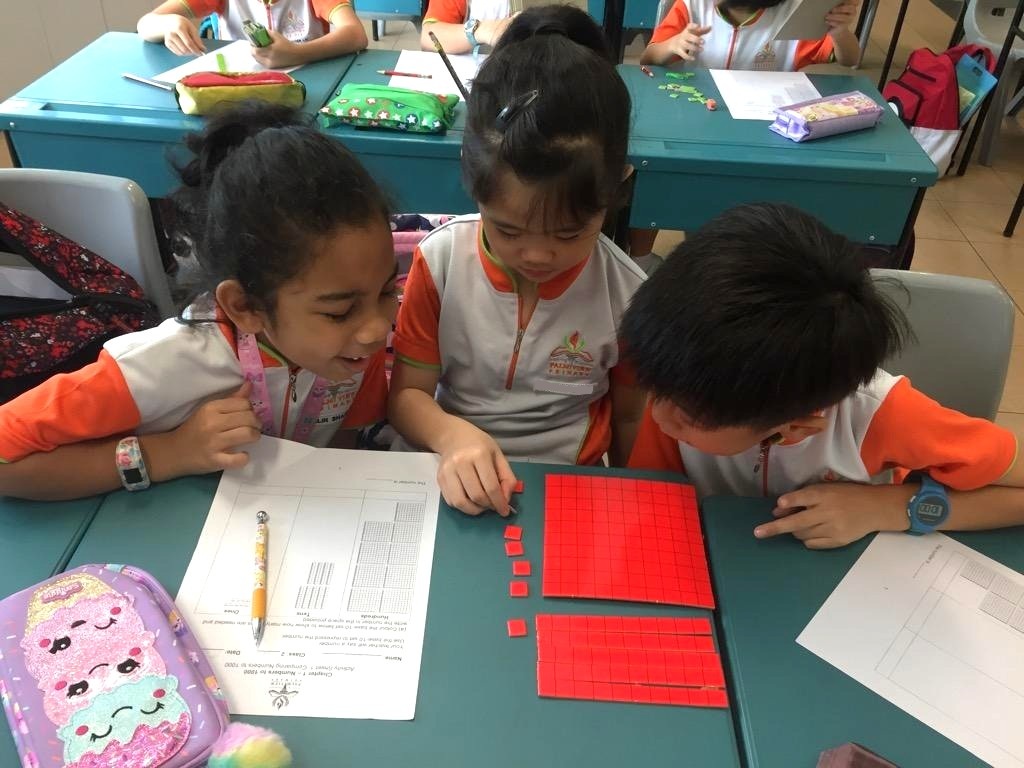
Students using the C-P-A approach for Addition and Subtraction within 1000.
The Concrete–Pictorial–Abstract (C-P-A) approach supports students in developing a deep understanding of Mathematics by guiding them from hands-on experiences to abstract thinking.
Concrete: Students use hands-on materials and real-life objects to explore mathematical concepts.
Pictorial: Students represent their understanding through drawings, diagrams and visual models.
Abstract: Students use numbers, symbols and mathematical language to solve problems and explain their thinking.
Through this progression, students build strong conceptual understanding and confidence in applying Mathematics in different contexts.
Problem Solving
The central focus of the curriculum is the development of mathematical problem-solving skills. Therefore, students are taught general problem-solving strategies and ways of thinking and approaching a problem. Polya’s 4-steps for problem solving is a useful framework for students to know and use. Palm View Primary has modified it to make it simpler for our younger students to understand.
Some of our school strategies:
RIGHT: Read the question, Identify Key words, Get a plan, Have it done, Triple check
MEWAS: Model, Equation, Working, Answer, Statement
NTUC: Number transfer, units, calculation
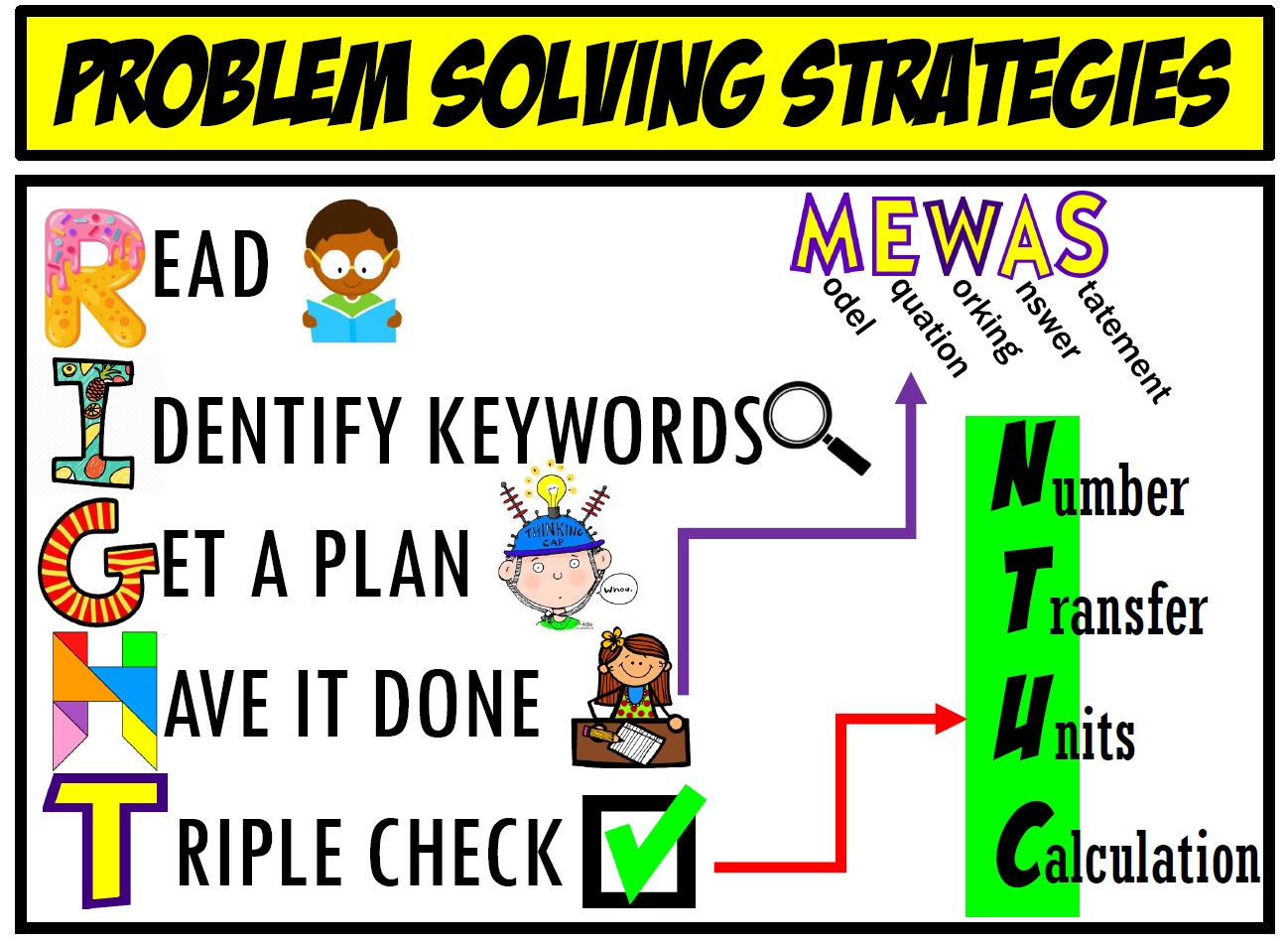
Explicit teaching of heuristics, reasoning and communication skills will also be taught to enable our students to become better problem solvers.
Learning Experience
There is a deliberate effort to enhance the learning experience of our students to foster joy of learning. In class, Mathematics lessons are designed with learning experience activities for students to learn mathematical concepts through games and class activities.
English and Math Carnival
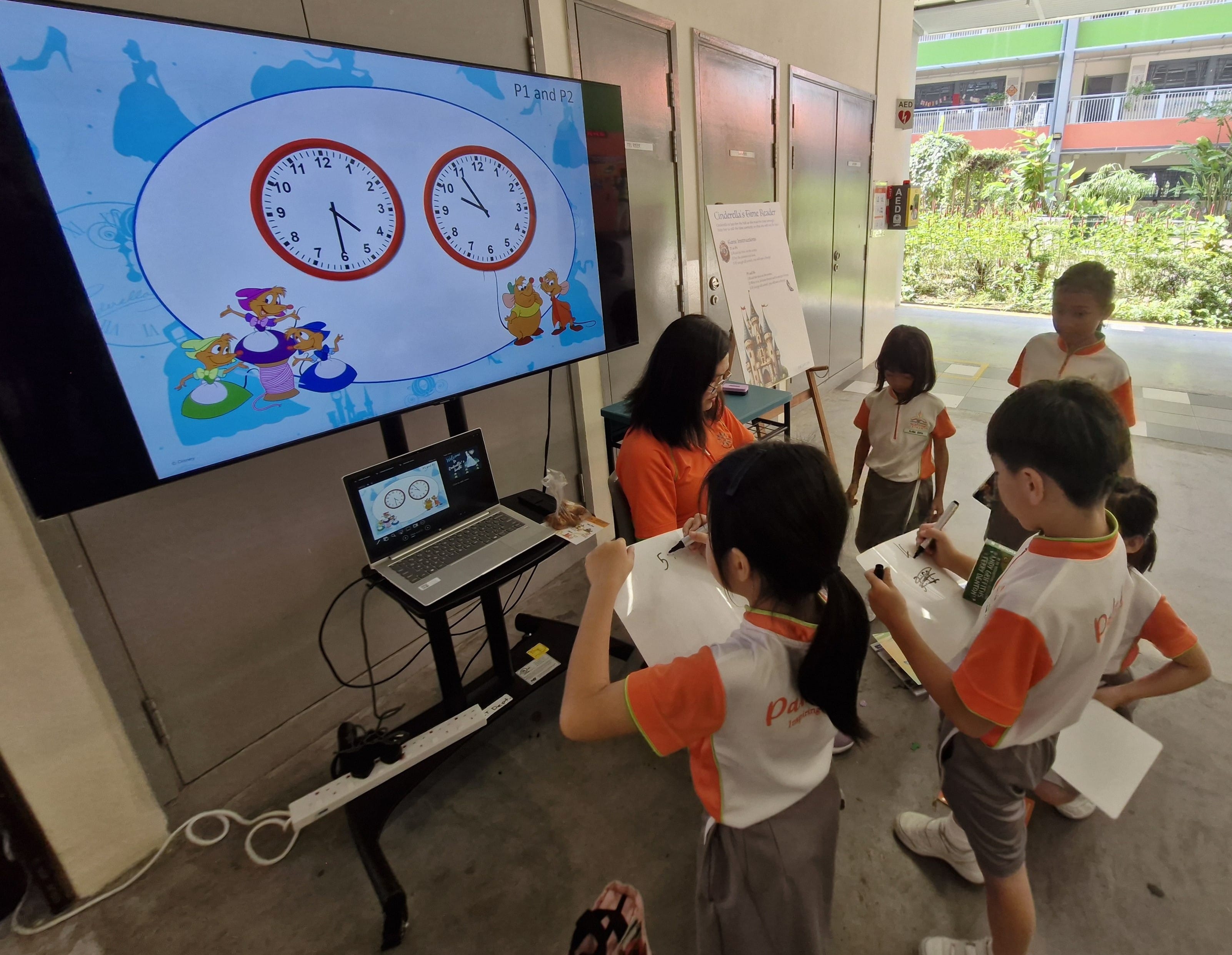
Students during a recess booth activity on Time during the English and Math Carnival
In collaboration with the English Department, our students take part in the annual English and Math Carnival, where Mathematics learning comes alive through fun and engaging activities. Through recess game booths and hands-on classroom activities, students apply concepts such as time, multiplication, division and problem-solving in creative ways. This experience encourages critical thinking and collaboration, while helping students see the joy and relevance of Mathematics beyond the classroom.
P1 Learning Journey to Punggol Coast Mall
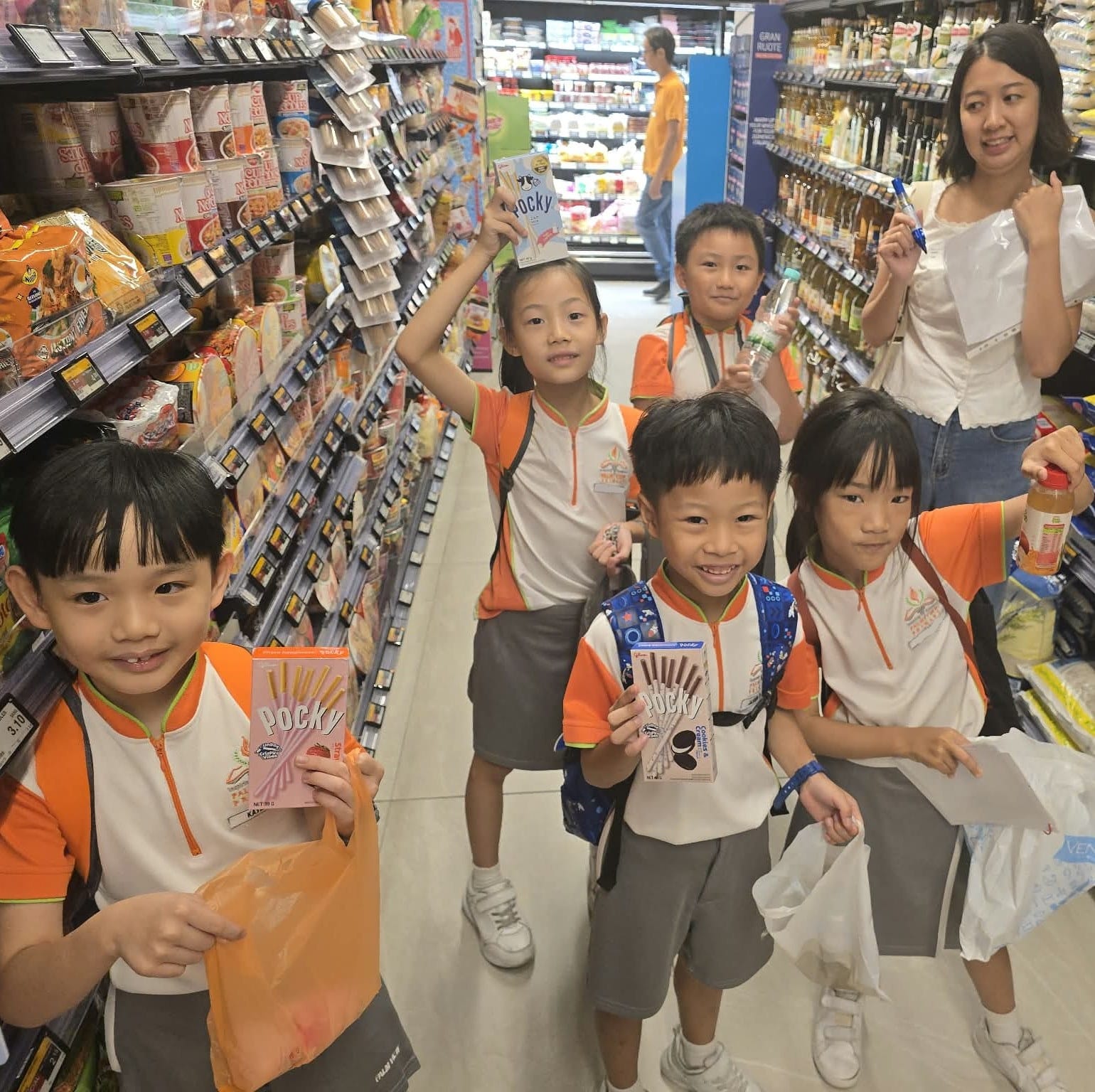
Students purchase items within a budget of $5 at the supermarket, providing them with a real-life context to learn Money.
Our Primary 1 students take part in a Mathematics Learning Journey to Punggol Coast Mall, where learning extends beyond the classroom into a real-world setting. Through hands-on activities, they apply Mathematics concepts such as shapes, patterns, measurement and money to complete practical tasks. As they explore the mall, students use their iPads to document their discoveries, measure distances using their footspans and practise making purchases within a $5 budget at the supermarket. This learning journey helps students see how Mathematics can be applied in everyday situations in a fun and meaningful way.
P2 Learning Journey to Changi Airport
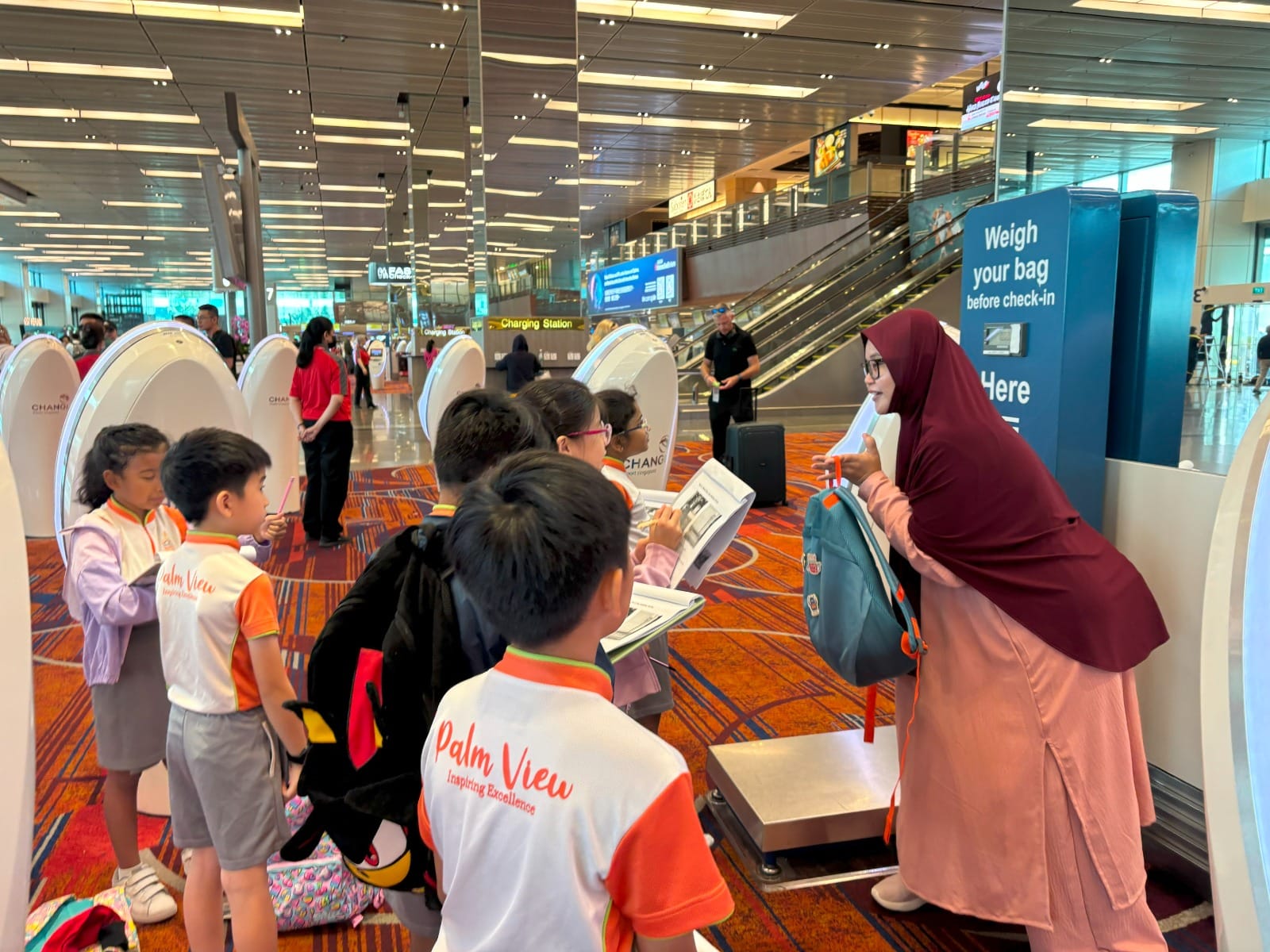
Students weighing their school bags at the Mass Activity Station of the Changi Airport Learning Journey
Our Primary 2 students take part in a Mathematics Learning Journey to Changi Airport, where learning extends beyond the classroom into a real-world setting. Through hands-on activities, they apply Mathematics concepts such as time, mass, length and number operations to solve practical problems. As they explore different parts of the airport, students also develop their observation, communication and critical thinking skills. This experience helps them see the relevance of Mathematics in everyday life.
Use of Technology
The school uses the affordance of ICT to help students to understand mathematical concepts using videos and other visualisations. Students are encouraged to use Student Learning Space (SLS) to communicate ideas and collaborate with one another as part of their knowledge building process.
Enrichment Programmes
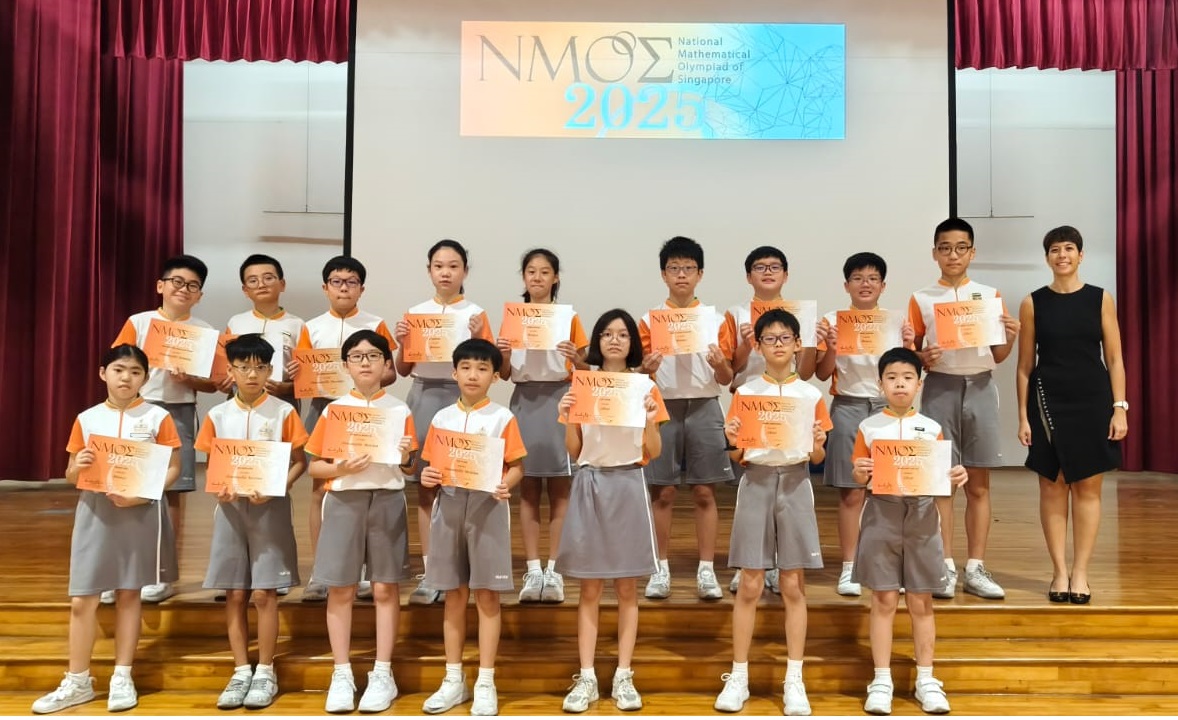
National Mathematical Olympiad of Singapore (NMOS) awards won by our students
The school plans enrichment programmes for upper primary students with an aptitude for Mathematics. Selected P4 and P5 students are invited to join the E2K programme. There are various competitions that selected students can participate in. Some of these Mathematics competitions are the Asia Pacific Mathematical Olympiad for Primary Schools (APMOPS), National Mathematical Olympiad of Singapore (NMOS) and Annual Mathlympics.